The history behind the room
What is a café cantante?
A café cantante was the 19th-century Spanish café with a flamenco stage. How it shaped the art, what replaced it and how Flamenco de Leones revives it.
Reserve your flamenco night ↗Quick answer
A café cantante was a Spanish café that added singing, guitar and dance to its drinks, popular from the middle of the 19th century. In Seville, Madrid and Barcelona such rooms made flamenco a paid profession. From the 1960s they were replaced by tablaos. Flamenco de Leones describes itself as a reinterpretation of the café cantante, and Madrid's tourism board says it recovers the essence of those cafés.
A café with a stage
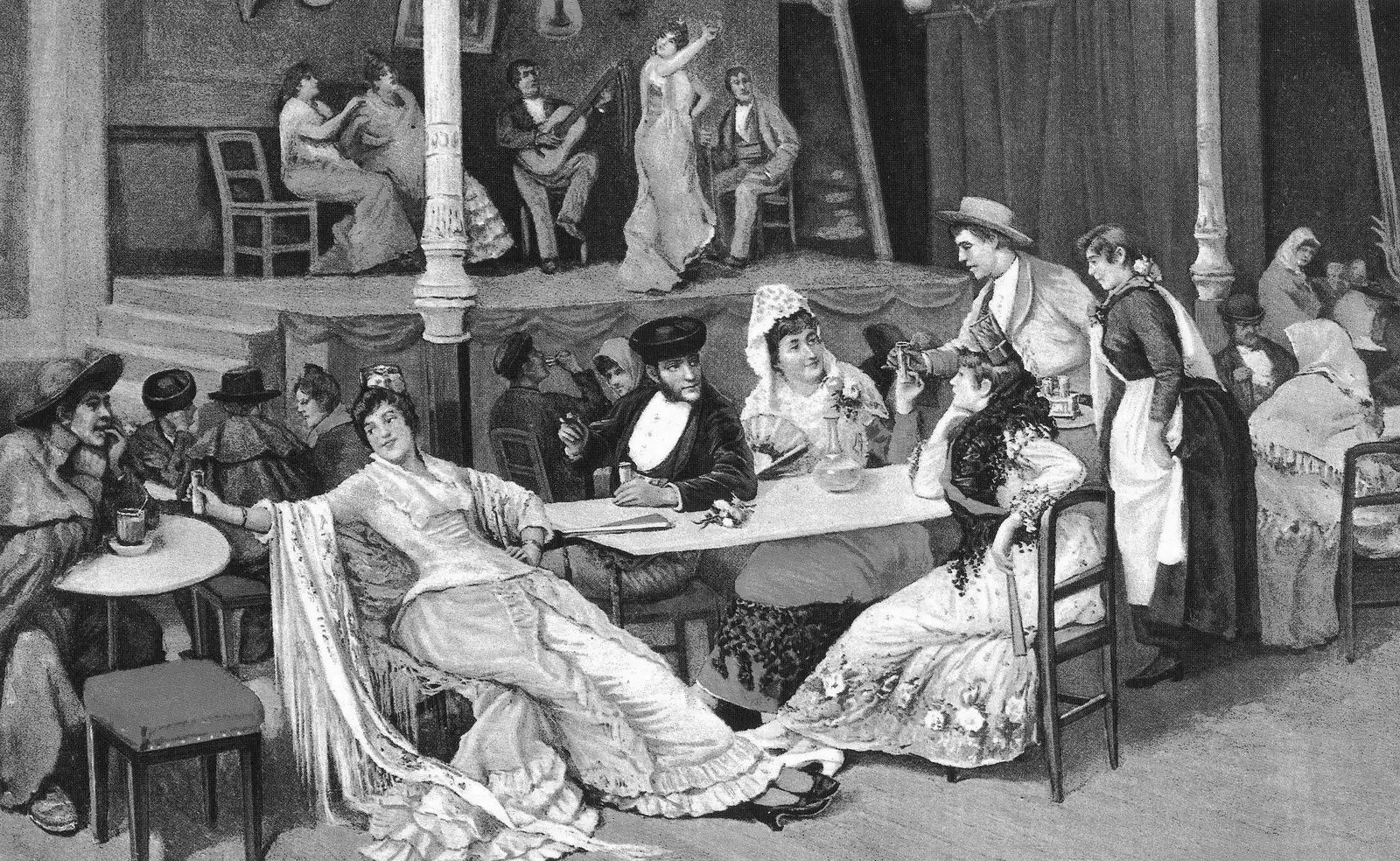
In Spain the name was given to venues that added shows to the service of a café. The shows were popular and made of cante, toque and baile: singing, guitar playing and dancing. The venue's own website describes them this way, and Wikipedia's entry on the tablao agrees that these cafés offered performances of singing, playing and dancing besides serving drinks. The room was a café first and a theatre second, which is why drinks and tables were part of the evening.
Where and when
The cafés cantantes were especially popular in Spanish capitals such as Seville, Madrid and Barcelona from the middle of the 19th century, according to the venue's own history. Wikipedia says they peaked from the mid-19th century and well into the second decade of the 20th. The cafés sat in the middle of ordinary city life, and flamenco was a night out with a drink before it was a concert art.
Why they mattered to flamenco
These rooms are credited with the emergence of the professional flamenco performer, because paid singers, guitarists and dancers now competed for an audience every night. Wikipedia notes that it was from the creation of these cafés that flamenco became more popular and that the professional performer emerged. The café was a proving ground, and what the artists learned there shaped the art for the next century.
Read next: Flamenco styles you may hear
What replaced them
The venue's own history says the cafés cantantes were replaced from the 1960s by tablaos flamencos, and Wikipedia gives the same date for the rise of the tablao, which took its name from the wooden stage, the tablado, where the dancer's footwork is heard. A tablao is a place built around the show, often with a drink or a meal. It is the format most visitors know today, and many of Madrid's flamenco rooms still use it.
The painting and the dancer
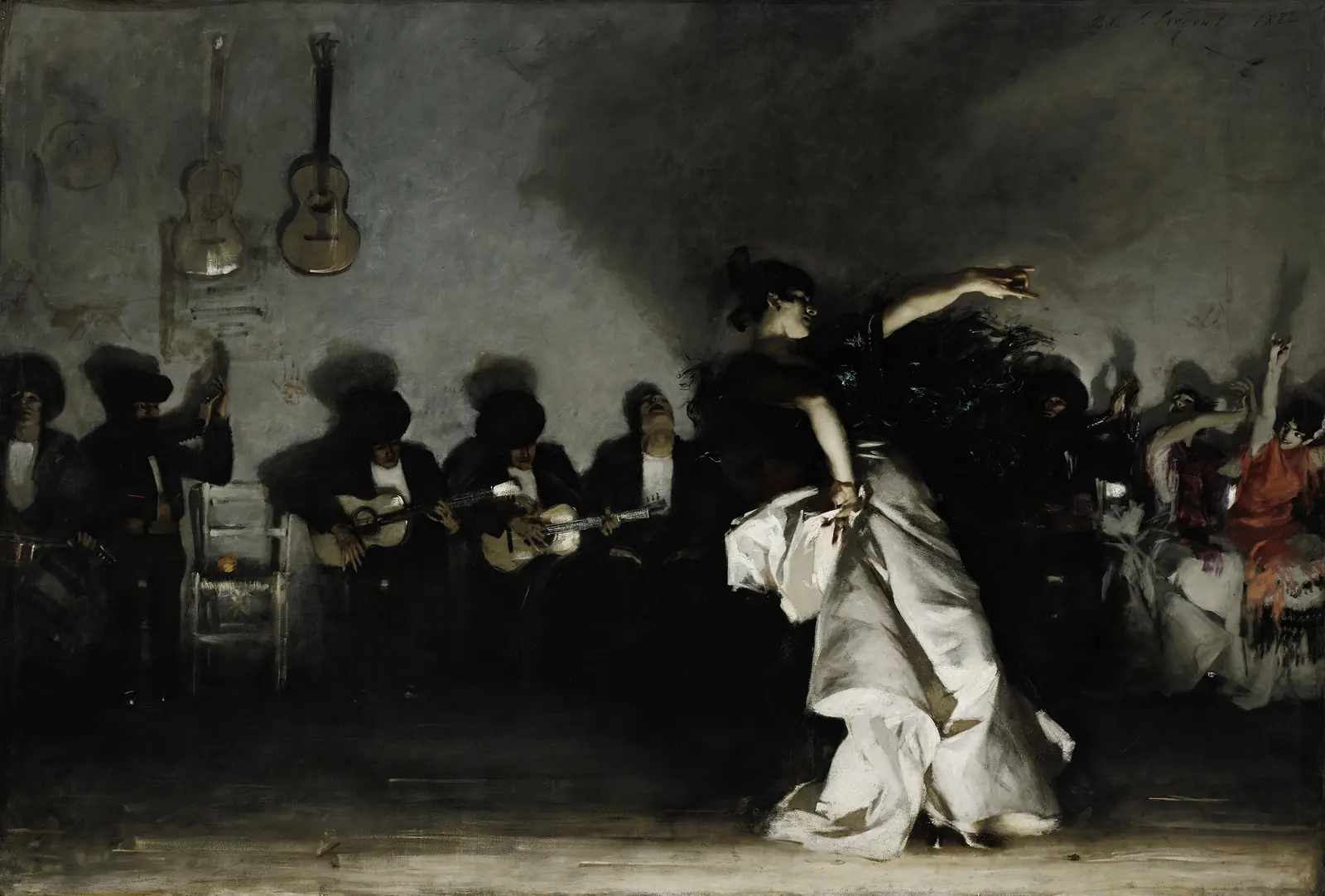
Flamenco on a stage drew painters of the age. John Singer Sargent's El Jaleo, painted in 1882, shows a Romani dancer performing to the accompaniment of musicians, and it was inspired by a trip he made through Spain in 1879. It hangs in the Isabella Stewart Gardner Museum in Boston. The title refers to the ruckus of the jaleo, the clapping and shouting that rises around the dancer.
What the format gives a visitor
The old café format has a practical advantage for a first-time audience: the evening is not only a performance. There are tables, there is food and drink, and the music arrives in a room that is already warm. You are not asked to sit in silence in a dark theatre for two hours. You are asked to be a guest. That is the spirit the venue says it is reviving, and it explains why the longer options pair the show with tapas or dinner.
A café cantante today
Flamenco de Leones says it was born to reinvent the flamenco evening through food, music, art and dance, and that it reinterprets the tradition and essence of the café cantante. Madrid's tourism board describes it as a venue by the Puerta de Alcalá that recovers the essence of the cafés cantantes of yesteryear, with song, guitar and dance. Where the old rooms were a café with a stage, this one combines a tablao with a restaurant under one roof.
Read next: Tickets: show, tapas or dinner
Frequently asked questions
When were the cafés cantantes popular?
From the middle of the 19th century, with a peak that Wikipedia places well into the second decade of the 20th century.
What does café cantante mean?
It is Spanish for a singing café: a café that staged flamenco singing, guitar and dance as part of its service.
How is a tablao different?
A tablao is built around the show and took over from the cafés cantantes from the 1960s, according to the venue and Wikipedia.
Is Flamenco de Leones a café cantante?
It describes itself as a reinterpretation of one, with a tablao and a restaurant in the same building.
Sources