The practical guide
Getting there and what to expect
Where Flamenco de Leones is, how to reach the Plaza de la Independencia, what to do around the show and how a first-time visitor should behave.
Reserve your flamenco night ↗Quick answer
Flamenco de Leones is at Plaza de la Independencia 4, entered through a carriage passage beside the Puerta de Alcalá, at the edge of Retiro Park. Retiro metro station is the nearest named stop. Arrive for the time on your confirmation, dress formally, and keep phones away while the artists perform. Allow anything from one hour to two and a half, depending on the option you booked.
Where it is
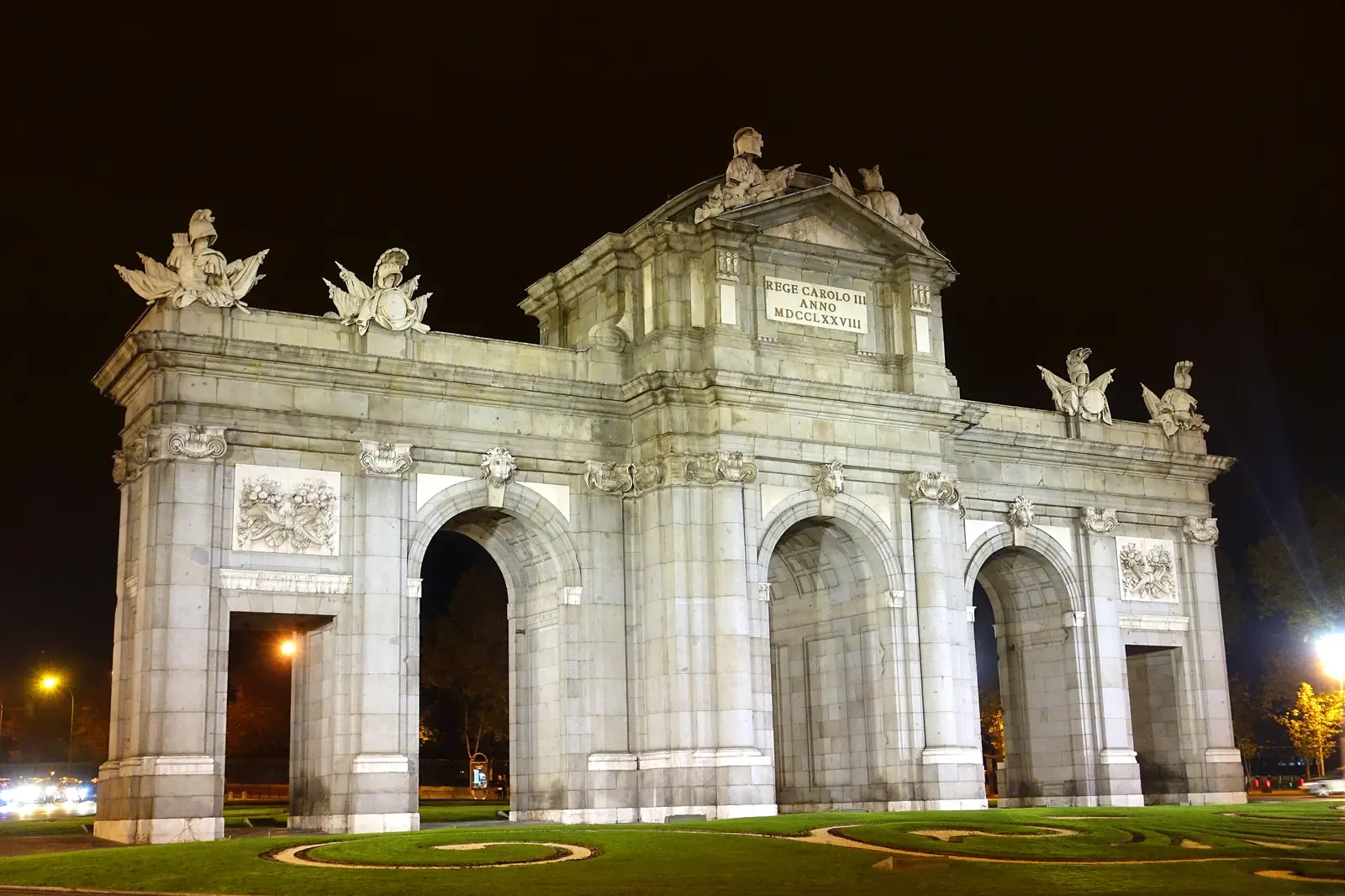
Madrid's tourism board gives the address as Plaza de la Independencia 4, ground floor, through the carriage passage, in the Barrio de Salamanca. The plaza is the roundabout around the Puerta de Alcalá, and the venue sits in a building on it. You enter at street level and the flamenco room is on the first floor. Put the square into your map app rather than a street number, because the gate is easy to spot and the number is not. If you arrive on foot from Retiro Park, the gate is the first thing you meet, and the building you want is on the square beside it.
- Plaza de la Independencia 4, ground floor
- Enter through the carriage passage
- The flamenco room is on the first floor
Getting there
The nearest metro stop named by the tourism board is Retiro, and the Madrid-Recoletos station on the local rail network is also listed. The BiciMAD bike-share has docking stations on Calle Serrano and Calle Valenzuela, both named on the same page. The plaza is a hub: Calle de Alcalá, Calle de Serrano, Calle de Alfonso XII and Calle de Salustiano Olózaga all meet there, so taxis and ride-hailing cars can reach it from any direction. On foot, the plaza is a short walk from the park and from the streets of the Barrio de Salamanca, which is a good reason to leave a little time before your arrival time and enjoy the approach.
Read next: The Puerta de Alcalá, explained
Before the show: Retiro Park
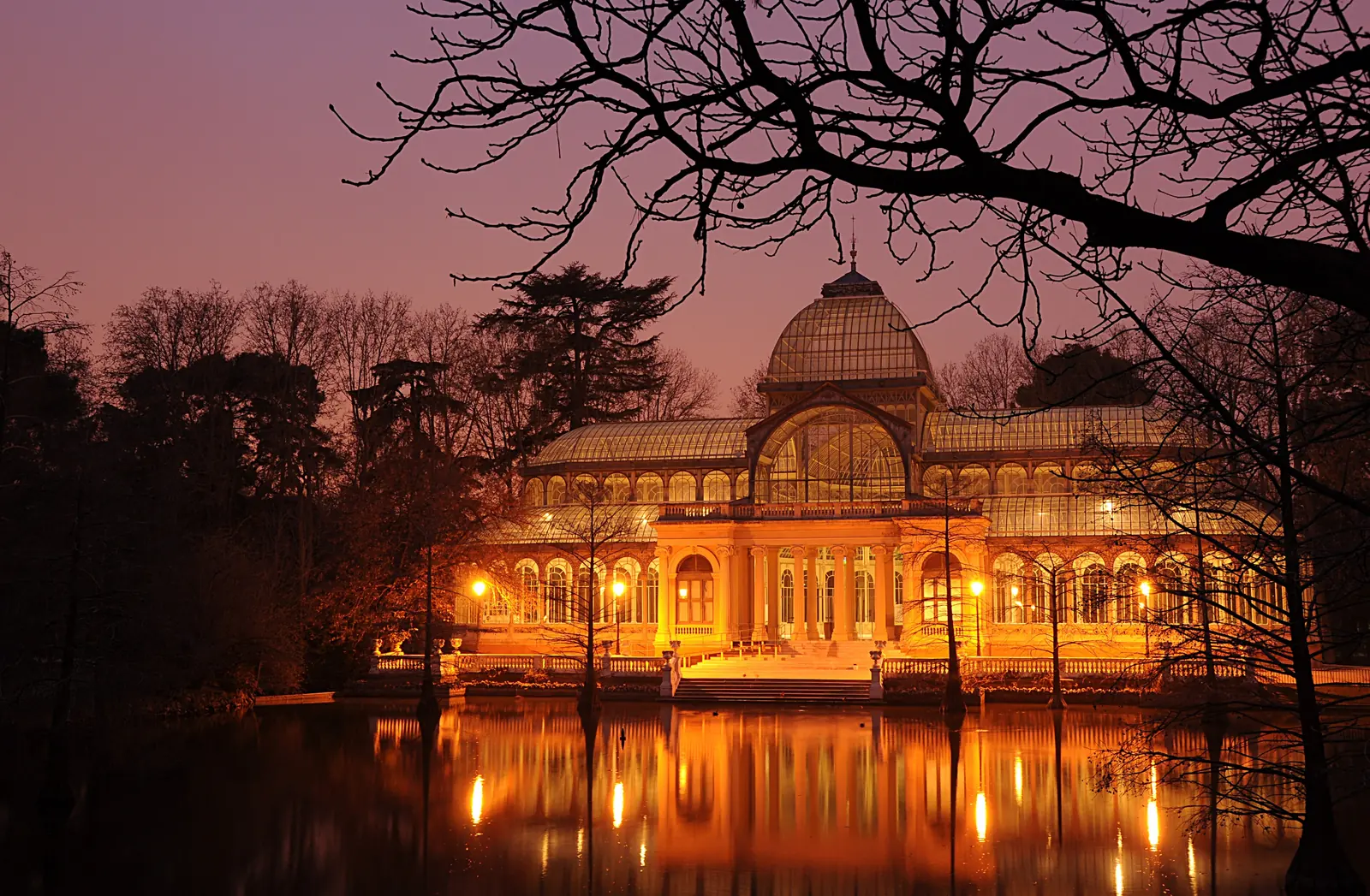
The gate stands close to the main entrance of Retiro Park, which belonged to the Spanish monarchy until 1868 and has been a public park since. It covers about 1.4 square kilometres, with gardens, monuments, an artificial lake and the glass Palacio de Cristal, built in 1887 for an exhibition about the Philippine Islands. Together with the Paseo del Prado it became a UNESCO World Heritage Site in 2021. A stroll through it before a formal dinner makes a calm way to pass the hours before the show. The park also has a rose garden, monuments and a large pond, so the plan can be as short or as long as the afternoon allows.
How the evening runs
Your confirmation tells you when to arrive, and the calendar tells you when the show starts. With tapas or dinner, the food comes first and the show follows, so arriving on time matters. With show only, the evening is shorter and you can fit a late walk or a late table around it. The booking page gives the range as one hour to two and a half. Plan the rest of your night around the longest option you chose, not the shortest. If you are meeting friends afterwards, tell them a time that allows for the whole evening, and do not promise to be anywhere else soon after the music ends.
- Show only: the shortest of the three evenings
- Tapas: food first, then the show
- Dinner: a seated meal, then the show, the longest of the three
Being a good audience
Flamenco has its own etiquette. Jaleo, the rhythmic clapping and cries of encouragement such as olé, is part of the art and not an interruption: it is how the room supports the artists. A visitor does not need to join in, and the safer course is to follow the room. Listen for the guitar and the singer, watch the dancer's feet, and keep phones away. If you are unsure whether to clap, wait for the locals. Wikipedia lists the common calls as olé and así se canta, which means that is the way to sing, and así se baila, that is the way to dance. You will hear them from the room, and you will hear them more as the evening warms.
Read next: What duende means in flamenco
Do you need to understand the words?
No. The venue's own text says as much: you do not have to understand the language, because the music carries the feeling. Songs are sung in Spanish. What matters is the voice, the guitar and the dance. If a song moves you, it has done its job. Read the short guide to the styles before you go and you will hear more in the first ten minutes. A few names are enough: soleá, seguiriya, fandango, tangos. You do not need to recognise them, only to know that the sounds you hear were built on rhythms with names and histories.
Read next: Flamenco styles you may hear
Eating around the show
If you chose show only, look for food on your own. The Barrio de Salamanca has restaurants, and the venue's own restaurant, Patio de Leones, is a taberna-style restaurant in the same building, directly below the tablao. With tapas or dinner, eating is part of the booking and you can plan around it. The venue's text says the food starts with a selection of tapas and ends with traditional Spanish cooking. Menus change, so no dishes are listed here. Guests with allergies or dietary needs can write to the contact address the venue's website gives for menu questions.
Getting home
Work out your way home before you sit down, because the evening can end later than you expect, particularly with dinner. Taxis and ride-hailing cars can reach the plaza from several roads, and the BiciMAD docking stations near the plaza are another option if you are comfortable with a bike at night. Metro opening hours are not something this page can promise, so look them up on the day. Walking back through the Barrio de Salamanca is a quiet end to the night. If you are staying nearby, the walk is part of the pleasure; if you are not, decide on the taxi or the bike before the last song and not after it.
What to wear and carry
The booking page lists a formal dress code, so dress for the evening and not the day. You will be seated for a while, so shoes that are comfortable as well as smart help. Take your confirmation, which carries the arrival time, and keep your phone for the booking details rather than for photographs. Guests with dietary needs are invited by the venue's website to write ahead, so do that in advance rather than at the table. If you are unsure what formal means for you, a jacket or a smart dress will never be wrong in a room decorated with paintings and murals.
Who this isn't for
A casual dress code is not on offer, because this one is formal. It is not the right pick for children who cannot sit through a long evening, since the options run up to two and a half hours. It is also not for travellers who want to keep the whole night open, because the show has a fixed start time and your confirmation sets an earlier arrival. If your trip is a series of daytime plans, the late finish is the thing to check first.
Frequently asked questions
What is the exact address?
Plaza de la Independencia 4, ground floor, through the carriage passage, in Madrid's Barrio de Salamanca, beside the Puerta de Alcalá.
Which metro station is nearest?
Madrid's tourism board names Retiro as the metro station for the venue. It also lists Madrid-Recoletos on the local rail network.
Is Spanish needed?
No. The venue's own text says the music reaches you whether or not you understand the language.
Can I clap or call out?
Jaleo, the clapping and shouts of encouragement, is part of flamenco. Follow the room, and wait for the locals if you are unsure.
How long should I plan for?
From one hour up to two and a half, depending on the option. Plan for the longest if you chose dinner.
Is there a dress code?
Yes, the booking page lists a formal dress code. Dress for the evening, not for a day of sightseeing.
Sources